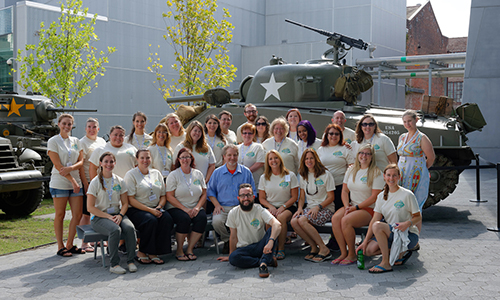
The Real World Science curriculum guide offers phenomena-based activities that engage students in the practices of science and engineering. Integrating STEM and history, Real World Science lessons show students how science and technology helped the United States overcome big challenges during World War II. This interdisciplinary curriculum also incorporates mathematics and literacy and is meant to support both teachers in self-contained classrooms as well as teams of teachers who work across disciplines.
What Will Float?
This is a formative assessment probe that can
be used with the activities concerned with
floating. You can use it in your Engage, or in
later stages of the lesson cycle. Alternatively,
this probe can be used repetitively, having
students revise and improve their responses.
Physics Forces: Building the Higgins Boat
During World War II, Andrew Higgins’s
company made more than 20,000 boats for
the military. Over 12,000 of these wooden
boats were landing crafts like those used on
the beaches of Normandy on D-Day.