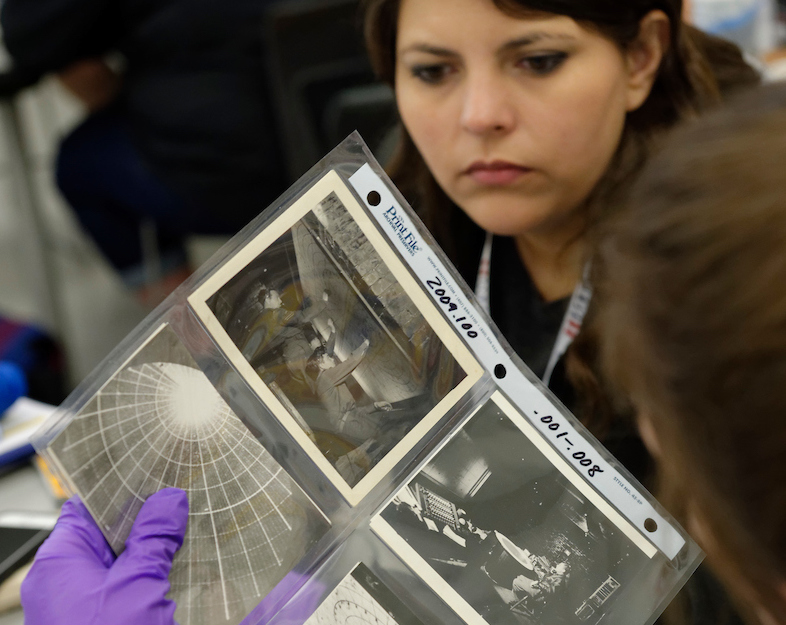
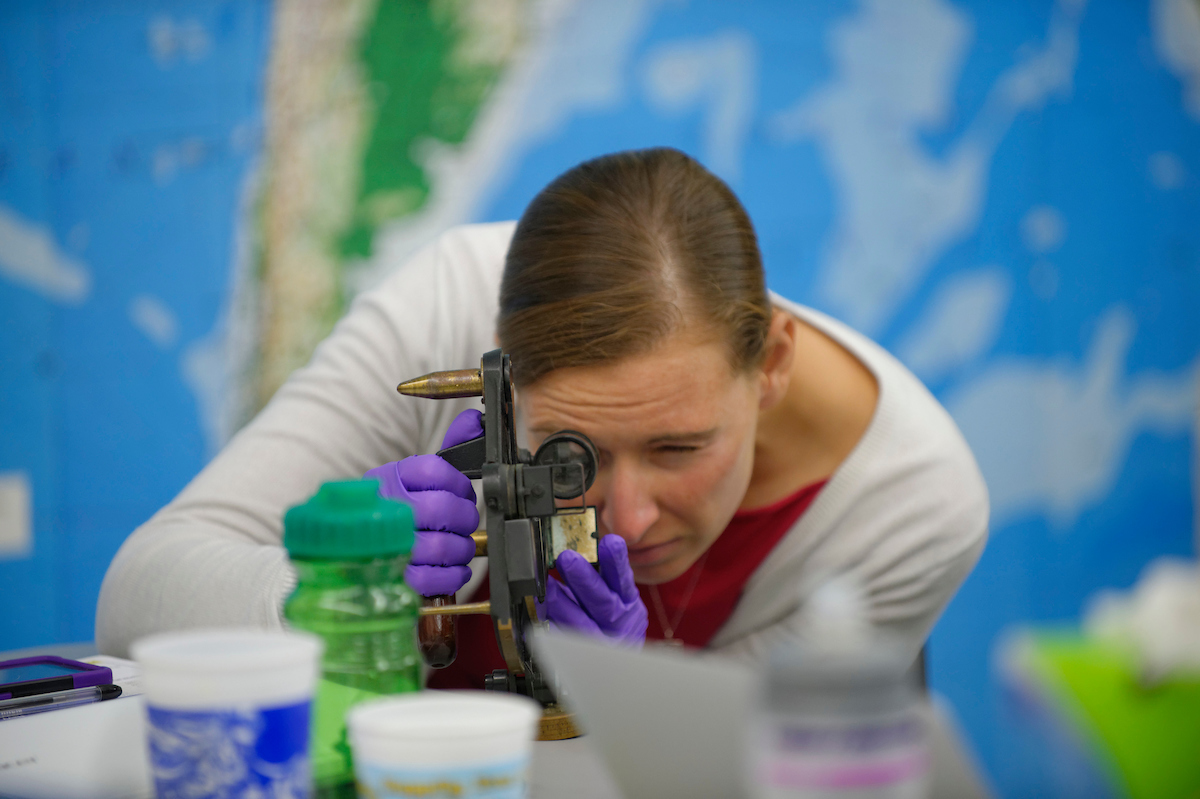
The Real World Science curriculum guide offers phenomena-based activities that engage students in the practices of science and engineering. Integrating STEM and history, Real World Science lessons show students how science and technology helped the United States overcome big challenges during World War II. This interdisciplinary curriculum also incorporates mathematics and literacy and is meant to support both teachers in self-contained classrooms as well as teams of teachers who work across disciplines.
Ferromagnetic Slime
In Ferromagnetic Slime, students make and
then investigate the properties of a polymer.
Chemistry: Soft Circuits
In Soft Circuits, students investigate the
properties of two kinds of Play-Doh.
New Materials
In New Materials, students will read about
synthetic polymers and watch a demonstration of
Styrofoam dissolving.
Chemistry: Build An Isotope
In Build an Isotope, students learn about isotopes
by making a model of the different forms of
atomic nuclei of an element.
Chemistry: Build An Atom
In Build an Atom, students learn about atomic
structures by making a model of an atom using
beans.
Keep It Separated
In Keep It Separated students will learn about how isotopes
were separated using a centrifuge by seeing a demonstration
of a centrifuge.
Chemistry: Build A Table
In Build a Table students will learn about the patterns of
characteristics in chemical elements.
Energy, Generators, and Motors
In World War II, the abundant use of electronics was of
great importance.
Life Science: Antibiotic Targets
In Antibiotic Targets, students learn about
the first antibiotics (sulfa and penicillin),
which work by actions on the cell walls of
bacteria.
Life Science: Blood in a Bag
World War II was a time when many
discoveries in medicine were put to use.